

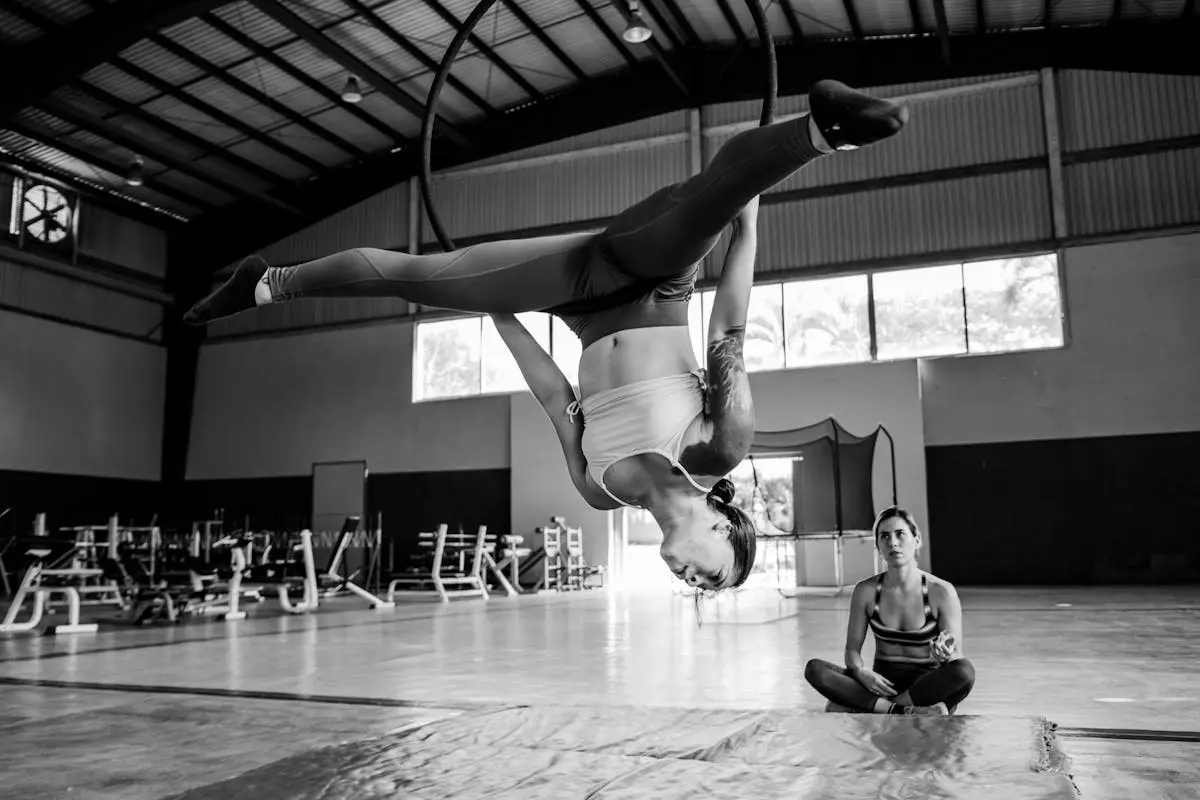
Are you a passionate aerialist, spending your days dreaming of intricate wraps on the silks or dynamic spins on the hoop? Whether you’re just starting your journey or have been gracing the air for years, the path of an aerialist is one of continuous evolution. Here at Acrofab Texas, we believe in fostering that growth, helping you transform from where you are to where you want to be.
But how exactly do you evolve your aerial skills, both on the silks and the hoop? It’s more than just mastering new tricks; it’s a holistic approach that combines physical prowess, mental fortitude, and a touch of artistic fla
The Foundation: Strength, Flexibility, and Technique
Before you can truly soar, you need a solid launchpad. This means dedicating time to:
- Strength Training: Aerial arts demand incredible strength, particularly in your core, grip, and upper body. Incorporate targeted exercises like pull-ups, push-ups, planks, and grip exercises into your routine. Remember, a strong foundation prevents injury and unlocks more advanced movements.
- Flexibility and Mobility: Increased range of motion is crucial for executing beautiful lines and complex poses. Regular stretching, active flexibility drills, and even practices like yoga or Pilates can significantly improve your aerial performance.
- Refining Basic Technique: Don’t underestimate the power of fundamentals. Even seasoned aerialists benefit from revisiting their basic climbs, inverts, and mounts. Clean technique not only looks better but also makes more advanced moves feel safer and more accessible. Are your foot locks on silks always tidy? Is your hip key on hoop precise? Small improvements here can have a huge impact.
Beyond the Basics: Expanding Your Repertoire
Once your foundation is solid, it’s time to explore new horizons:
- Learning New Tricks (Strategically!): It’s tempting to jump straight to the flashiest moves you see on social media. However, a more effective approach is to learn progressively. Work with your instructors to identify skills that build upon each other. For example, mastering various types of inverts on the silks opens up a multitude of drops and sequences. On the hoop, perfecting different types of straddles can lead to more complex transitions.
- Exploring Different Pathways and Transitions: An aerial performance isn’t just a collection of tricks; it’s a fluid story told in the air. Focus on how you move between tricks. Can you transition smoothly from one pose to another? Are your pathways clean and intentional? This is where true artistry begins to emerge.
- Cross-Training on Different Apparatuses: If you’re primarily a silks aerialist, try a hoop class! If the hoop is your main love, experiment with silks or even static trapeze. Each apparatus challenges your body in unique ways and can introduce you to new concepts and movement patterns that will benefit your primary discipline.
The Mental Game: Mindset and Artistry
Evolving as an aerialist isn’t just about physical training; your mindset plays a massive role:
- Embrace the Process (and the Plateaus): There will be days when you feel stuck, or a trick just isn’t clicking. This is completely normal! Embrace the journey, celebrate small victories, and understand that plateaus are a natural part of any learning process. Patience and persistence are key.
- Listen to Your Body: Pushing too hard too soon can lead to injury and setbacks. Learn to recognize the difference between challenging yourself and overdoing it. Rest and recovery are just as important as training.
- Cultivate Creativity and Musicality: Aerial arts are a beautiful blend of athleticism and art. Experiment with different rhythms, explore your own unique style, and try to tell a story with your movements. How does the music influence your transitions? Can you embody different emotions in your performance?
- Film Yourself (and Review Critically): It can be uncomfortable at first, but filming your practice sessions provides invaluable feedback. You’ll spot areas for improvement that you might not notice otherwise, from the angle of your leg in an arabesque to the flow of your transitions.
No matter where you are along your aerial journey, remember that persistence is key to your growth as a performer. Embrace the challenges and keep pushing and practicing to develop your skill!