

Aerial straps are transforming the world of entertainment! As an entertainer, the right equipment can make all the difference in your performance. In this blog, we’ll dive into why aerial straps should be an essential part of your toolkit, whether you’re a seasoned performer or just starting out. Let’s discover how these versatile tools can elevate your act and ensure your audience is left awe-inspired!
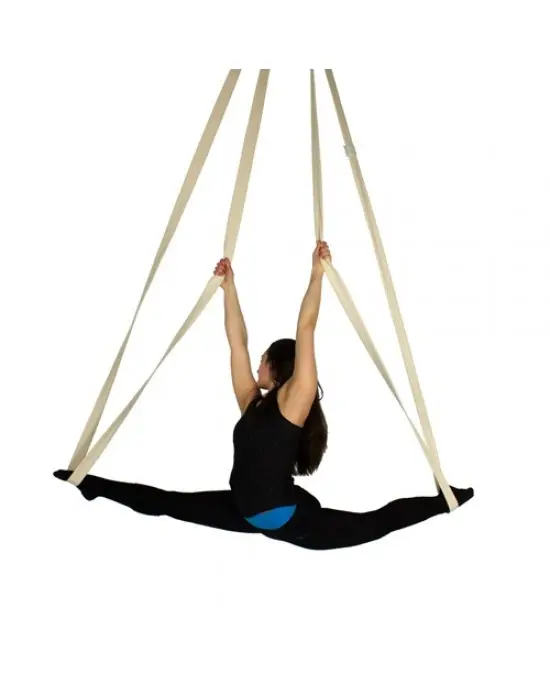
Understanding Your Aerial Straps: The Top Bar and Strap Options
Let’s break down the essential components of your aerial strap setup:
The Top Bar: Your Central Connection Point
The top bar is the piece of hardware that connects your straps to the rigging point above. It plays a crucial role in the functionality and feel of your straps. Here are the common options you’ll encounter:
- Round Rings (O-Rings): These are perhaps the most common top bar option. They offer a smooth, consistent point of connection and allow the straps to move freely. This versatility makes them suitable for a wide range of movements and skill levels. At Acrofab Texas, you’ll likely see O-rings as they offer a great foundation for learning and progressing.
- Triangular Rings (Delta Rings): Delta rings provide a more defined connection point. The triangular shape can sometimes offer a more stable feel for certain movements and can be preferred by some advanced practitioners for specific techniques.
- Swivels: Some top bar setups incorporate a swivel directly above the straps. Swivels allow the straps to rotate independently of the rigging, which can be beneficial for preventing twists and allowing for smoother transitions in dynamic sequences. While beneficial, beginners may find the added movement a bit challenging initially.
When choosing a top bar, consider:
- Your experience level: Beginners often start with O-rings for their versatility.
- Your training goals: Certain disciplines or advanced techniques might favor a specific top bar.
The Straps Themselves: Material, Length, and Handles
The straps are the fabric or webbing that you grip and manipulate. Several factors come into play when selecting the right straps:
- Material:
- Polyester Webbing: This is a common and durable choice. Polyester straps offer good grip and are resistant to stretching. They are often a great all-around option for training.
- Nylon Webbing: Nylon can be slightly softer than polyester and may offer a bit more stretch. While some aerialists prefer the feel of nylon, the added stretch can be less ideal for beginners learning foundational movements that require stability.
- Other Materials: You might encounter other materials, but polyester and nylon are the most prevalent in aerial straps.
- Length: The length of your straps is crucial and depends on your height, the height of the rigging point, and the types of movements you intend to perform. Straps that are too short will restrict your range of motion, while straps that are too long can create excessive slack and be unsafe.
- Standard Lengths: Straps often come in standard lengths (e.g., 8ft, 10ft, 12ft).
- Adjustable Straps: Some straps have buckles or other mechanisms that allow you to adjust the length. These can be useful for sharing equipment or experimenting with different lengths.
- Handles/Loops: The ends of the straps typically feature handles or loops that you grip with your hands or place your feet into.
- Soft Handles: These are made of the same webbing as the straps and are comfortable for gripping.
- Padded Handles: Some straps have padded handles for added comfort, especially during longer training sessions.
- Reinforced Loops: These are strong, sewn loops that can be used for both handholds and foot placements.
When choosing your straps, consider:
- Your comfort: The material and handle type should feel good in your hands.
- Your intended use: Different disciplines or tricks might benefit from specific strap lengths or handle types.
- Durability and safety: Ensure the straps are made from high-quality materials and are in excellent condition. Always inspect your straps for any signs of wear and tear before each use.
Getting Started with Aerial Straps: Safety First!
Now that you have a better understanding of the equipment, let’s talk about using aerial straps safely and effectively:
- Proper Warm-up: Just like any aerial discipline, a thorough warm-up is essential before working on straps. Focus on warming up your shoulders, arms, core, and grip strength.
- Start with the Basics: Don’t try advanced maneuvers right away. Begin by getting comfortable with the feel of the straps, practicing basic hangs, and engaging your core to control your body.
- Focus on Grip Strength: Straps require significant grip strength. Incorporate grip-strengthening exercises into your conditioning routine.
- Listen to Your Body: Don’t push yourself beyond your limits, especially when you’re first starting. Take breaks when needed and pay attention to any pain.
- Spotting is Crucial: Always work with a qualified instructor or experienced spotter, especially when learning new moves. Our instructors at Acrofab Texas are here to guide you and ensure your safety.
- Proper Technique: Focus on proper form and technique from the beginning. This will help prevent injuries and allow you to progress more effectively.
- Regular Equipment Checks: Before each session, thoroughly inspect your straps, top bar, and rigging for any signs of damage or wear. Report any concerns to your instructor immediately.